What PM Narendra Modi Meant When He Asked Indians to Stop Buying Gold, Avoid Foreign Travel, and Use Less Fertilizer
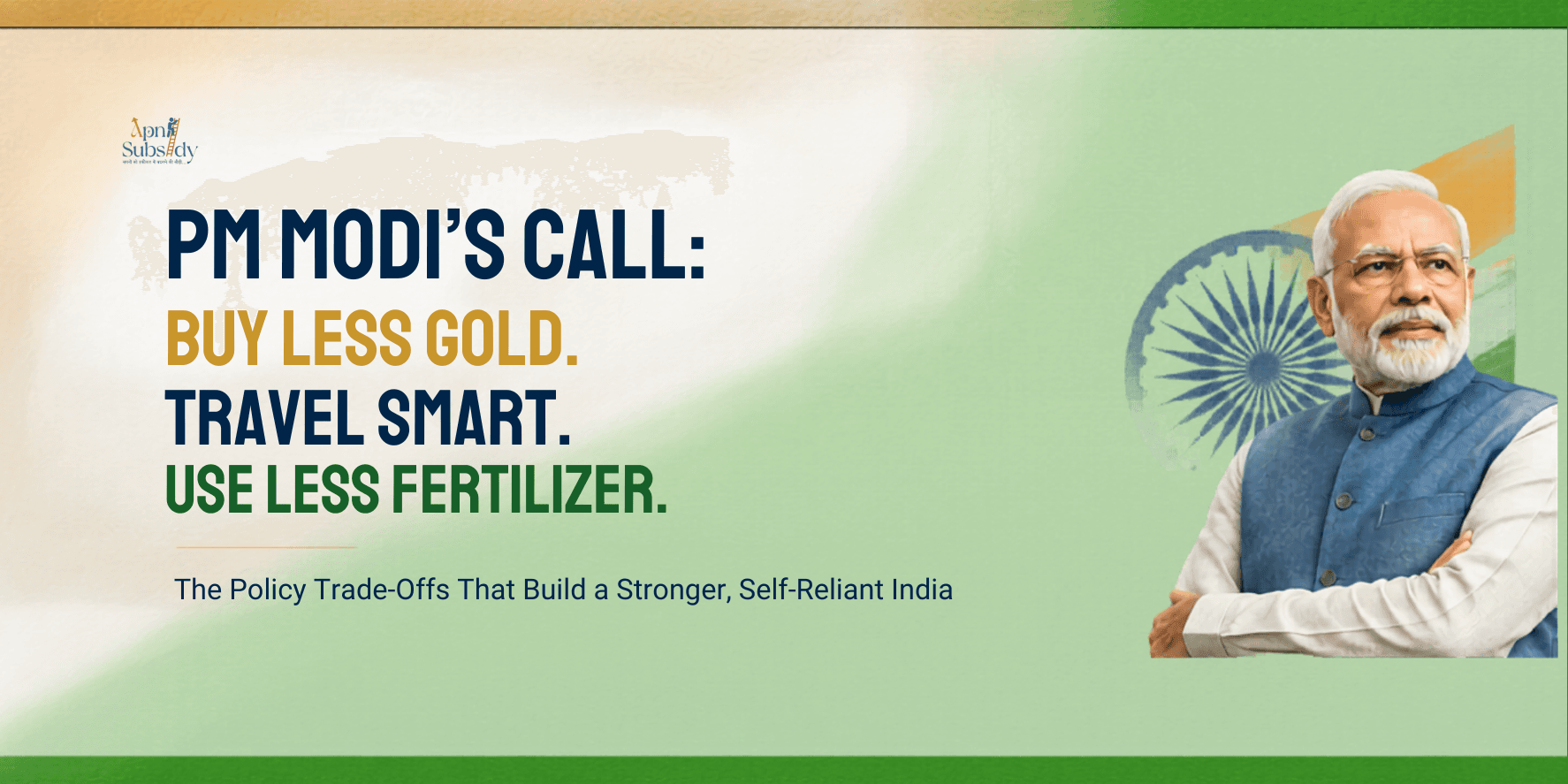
On May 10, 2026, Prime Minister Narendra Modi delivered a speech in Hyderabad that turned traditional economics upside down. He made a direct appeal to ordinary citizens: stop buying gold, skip foreign travel, return to working from home, and slash fertilizer use by half.
Framed as a national act of patriotism to protect India's foreign exchange and resource reserves, this appeal has massive ripples. Let’s break down exactly who wins, who loses, and the hidden trade-offs across these four sectors.
1. The Gold Economy: Stopping the Dollar Drain
India mines less than 1% of the national demand. Every gram purchased is bought in US dollars, draining our precious foreign reserves.
The Macro Logic: In the 2025–2026 financial year alone, India spent a staggering $72 billion on gold imports. Halting purchases stops rupees from turning into fleeing dollars.
The Ground Reality: This directly squeezes the domestic jewelry ecosystem. From massive retail chains down to local family-run shops, footfall drops instantly when consumers hesitate.
The Human Cost: The gem and jewelry sector employs 4 to 5 million people. Daily-wage artisans, polishers, and goldsmiths in hubs like Surat and Jaipur face immediate income insecurity when orders stall.
2. Foreign Travel: Saving Forex at the Cost of Aviation
Every destination wedding, global vacation, or international student fee sends capital out of the Indian economy.
The Macro Logic: Over 33 million Indians traveled abroad in 2025, spending upwards of $31 billion.
The Ground Reality: Reducing outbound travel creates immediate revenue risks for domestic aviation heavyweights like Air India and IndiGo, alongside thousands of travel agents and visa service providers.
The Friction: Limiting luxury travel saves foreign currency, but the policy doesn't distinguish between leisure trips and essential travel like work or medical needs.
3. Work From Home: Energy Security vs. Real Estate Realities
The push for remote work is entirely about curbing oil consumption amid global supply chain vulnerabilities.
The Macro Logic: India imports 85% to 90% of its oil. With ongoing disruptions in the Strait of Hormuz due to the Iran conflict, cutting commuting fuel is a strategic shield.
The Friction: Only a tiny, educated, urban minority can actually work from a laptop. Construction workers, drivers, retail staff, and teachers cannot take their work home, making the "shared burden" unequal.
The Collateral Damage: Commercial real estate takes a heavy hit. Lower office occupancy impacts developers carrying massive loans, which directly pressures lending banks and municipal property tax revenues.
4. Fertilizers: Protecting Imports, Risking Food Security
The PM's request for farmers to halve their fertilizer use targets the natural gas and oil imports required to manufacture urea.
The Macro Logic: India imported roughly 10 million tonnes of urea last year. Cutting use preserves foreign exchange reserves.
The Ground Reality: Indian agriculture is already fighting rising input costs and erratic weather. Forcing a sudden drop in fertilizer usage risks lower crop yields.
The Domino Effect: A drop in food production sparks inflation. When food prices spike, the urban poor and daily-wage earners bear the brunt, spending up to 60% of their household income just to eat.
At a Glance: The Policy Trade-Offs
Sector | The Macro Goal (Why it helps) | The Micro Impact (Who gets hurt) |
Gold | Saves part of a $72B import bill | 4–5 million artisans and local jewelers |
Foreign Travel | Retains $31B+ in domestic circulation | Indian airlines, travel agencies, essential travelers |
Work From Home | Shields against Strait of Hormuz oil shocks | Commercial real estate, fuel pumps, blue-collar equity |
Fertilizer | Lowers dependency on imported urea components | Farm productivity, agricultural supply chains, food inflation |
Narendra Modi’s statement was not just about asking citizens to sacrifice convenience or spending habits. It was a broader economic appeal aimed at protecting India’s foreign exchange reserves and reducing import dependency.
Whether one agrees with the approach or not, the speech highlighted how deeply connected everyday consumer behavior is to national economic stability.
From the jewelry markets of Jaipur to fertilizer-dependent farms across rural India, the impact of such messaging can ripple through millions of livelihoods and businesses.
Tags
Work With Us
Need help identifying the right subsidy, preparing documentation, or maximizing claim value? Our team can guide you end to end.
Get in Touch